





Georgia
Suatisi Lake
*scouting trip
2 days
duration
hard
difficulty
~28 km
distance
↑↓2500 m
ascent / descent
Scouting means we haven't hiked this specific route yet — we've only studied it through maps and reports from those who have.
The lake is very close to the border, so you must have your passport with you. We might need to get a permit from the border guards (their post is usually right in the gorge).
The lake is very close to the border, so you must have your passport with you. We might need to get a permit from the border guards (their post is usually right in the gorge).

Itinerary
Day 1:
The way to the lake
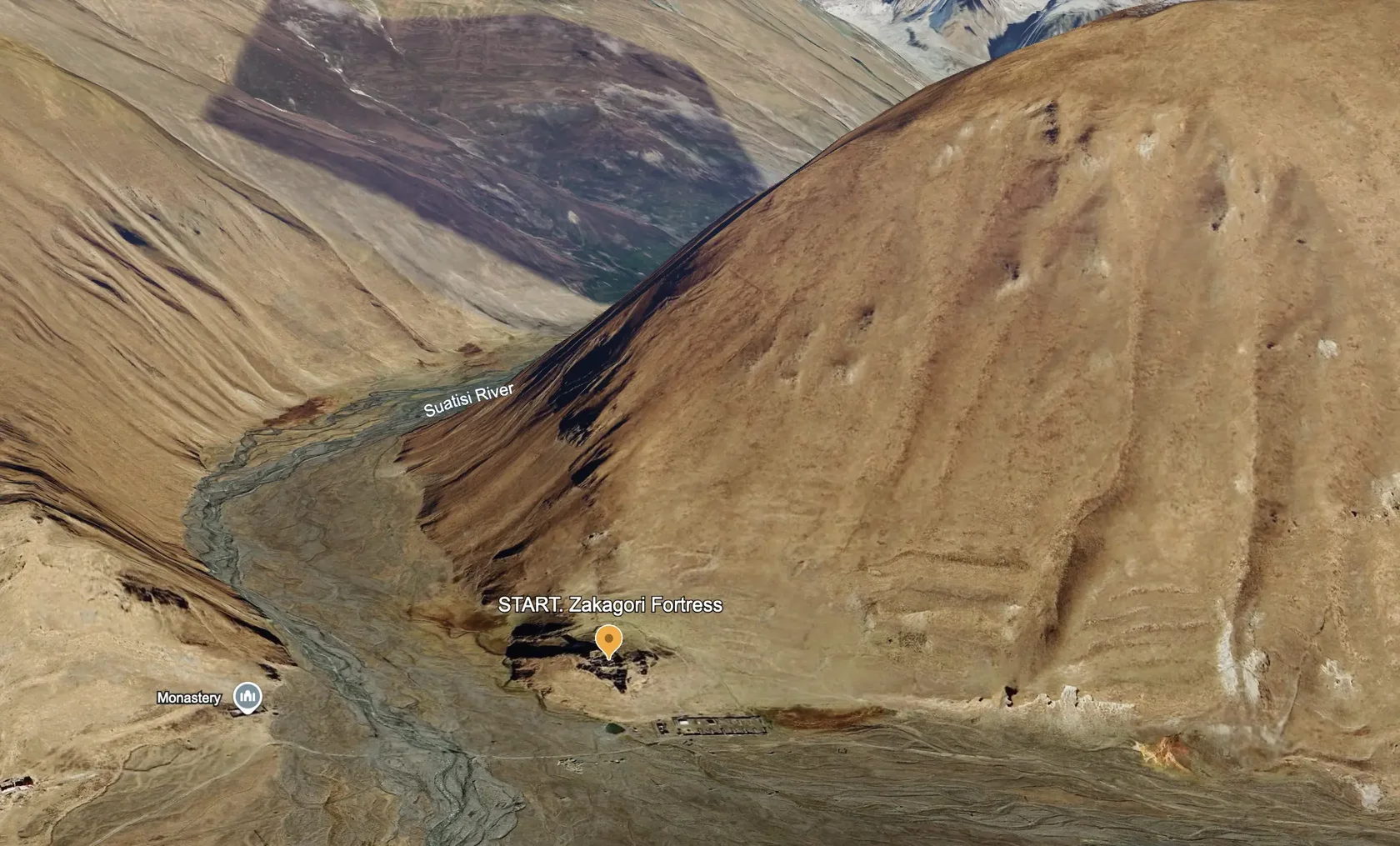
Tbilisi → Zakagori fortress → Suatisi valley → Suatisi lake
Distance / elevation gain: ~11.5 km / ↑720 m
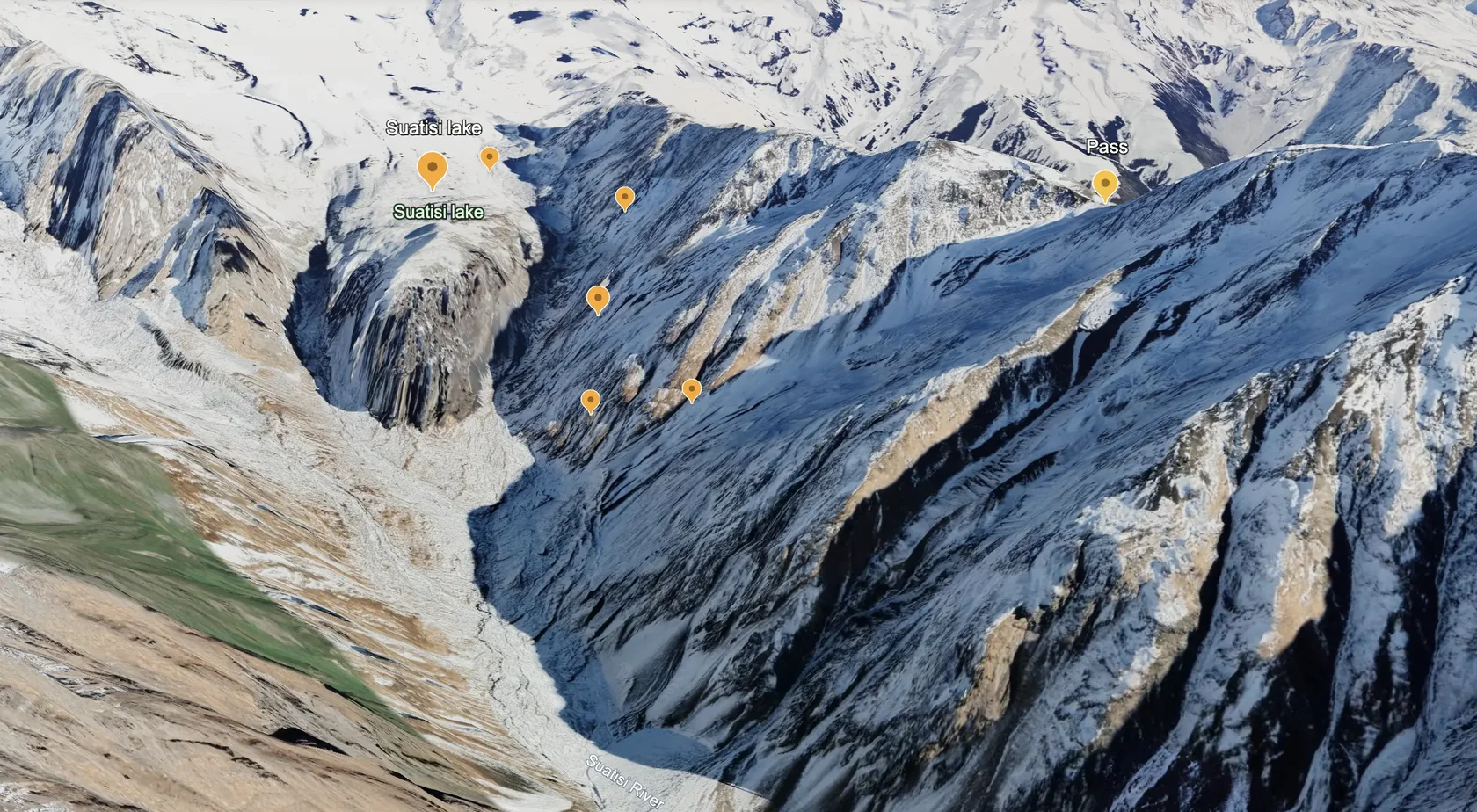
The route kicks off in Truso valley. To skip the long walk through the crowds, we’ll drive straight to Zakagori fortress. It sits right at the turn into Suatisi valley. The border guards will likely ask to see our permits there, and then the real journey begins. We’ll trek about 11 kilometers along the river with a steady, gradual climb. The final stretch to the lake is a steeper push up the mountainside. Once we conquer that, we’re at our destination: the stunning Suatisi glacial lake. It’s tucked away at about 3100–3200 meters above sea level. Like most glacial lakes, Suatisi has an incredible bright turquoise color. Depending on the weather, it shifts from milky tones to a piercing blue. This is where we’ll pitch our tents, grab some dinner, and crash for the night.
*If you check the map, you’ll see a massive glacier flowing down to the lake. It starts up on Mount Suatisi. We can hike closer to the glacier if you're up for it.
*If you check the map, you’ll see a massive glacier flowing down to the lake. It starts up on Mount Suatisi. We can hike closer to the glacier if you're up for it.
Day 2:
heading back over the pass
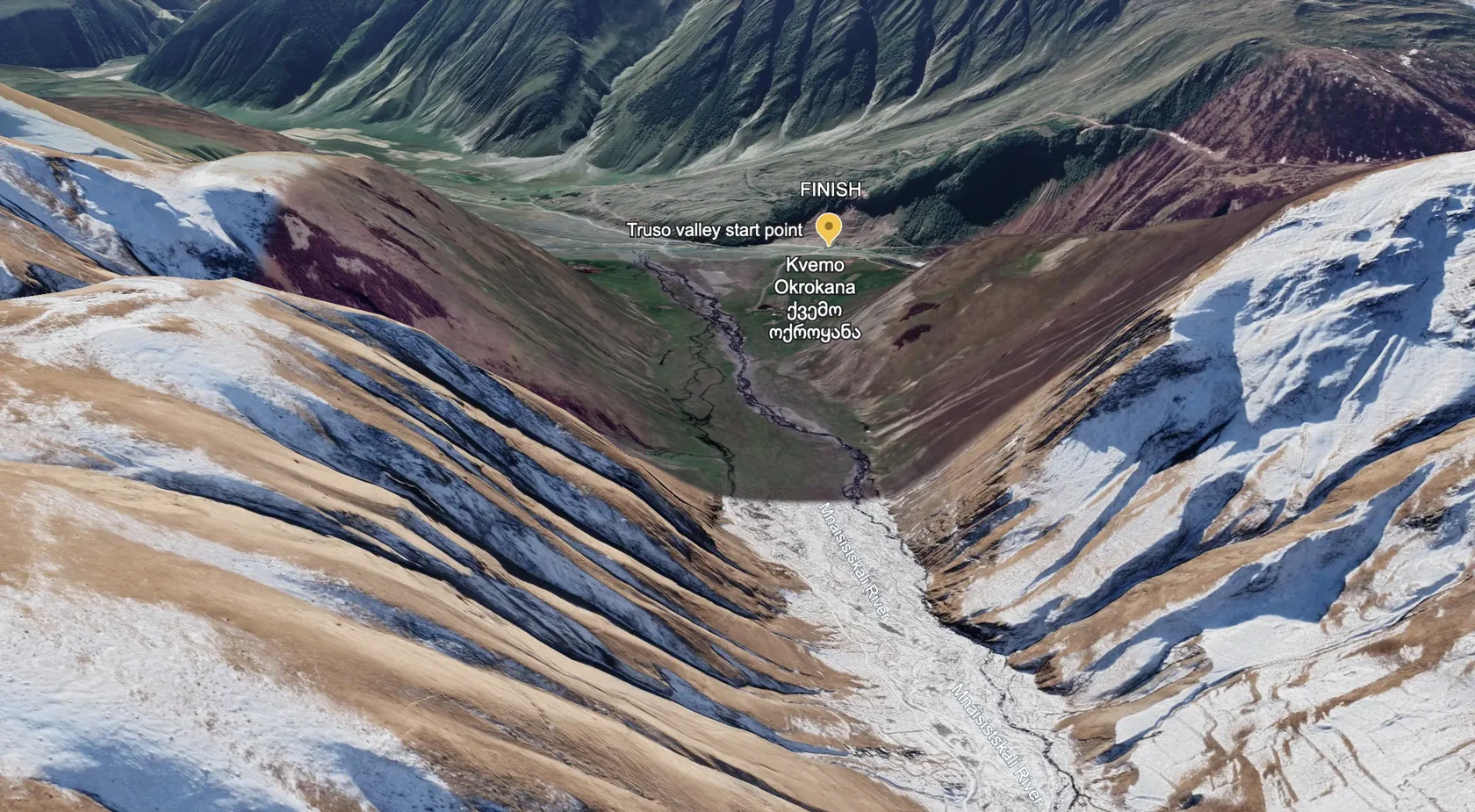
Suatisi lake → South Iriston pass → Mna valley → Kvemo Okrokana → Tbilisi
Distance / elevation gain / loss: ~16 km / ↑798 m / ↓1979 m
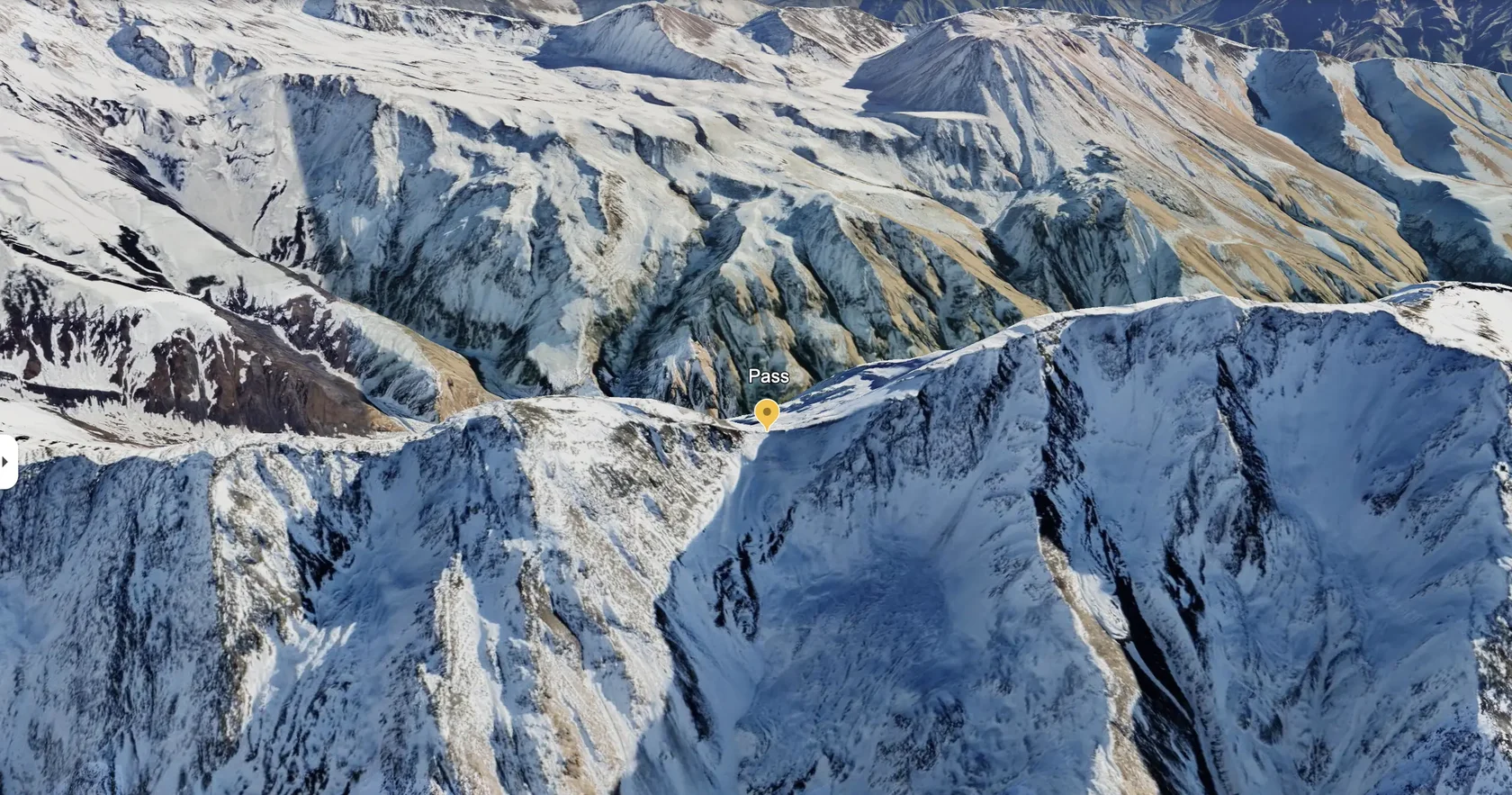
We'll wake up early to enjoy breakfast and soak in the lake views. Then, we head for the South Iriston Pass (1A) at 3385 m. This is the steepest and toughest part of the trek. From the pass, we'll descend into the Mna Valley. We'll find a spot in the valley to rest and grab lunch. After that, it's a chill, pleasant hike along the river down to Kvemo Okrokana, where our transfer back to Tbilisi will be waiting.
What to bring
- Underwear
- Thermal layers
- T-shirt
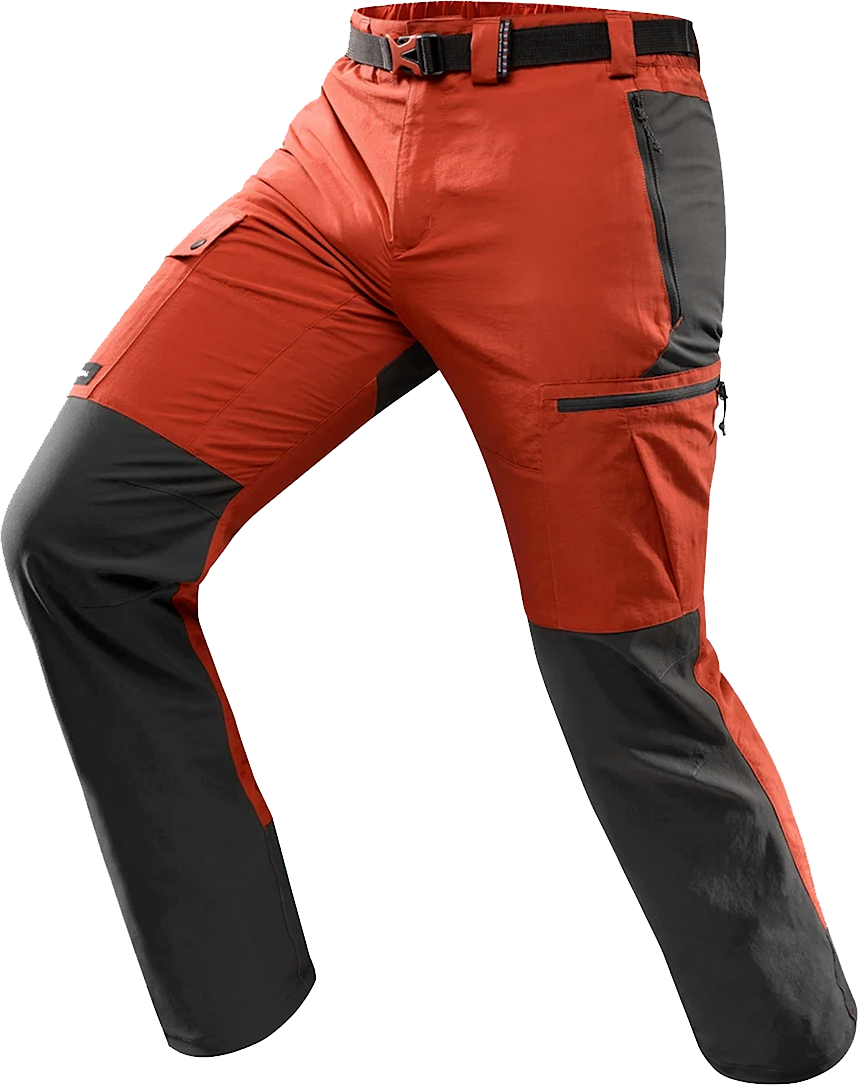
- Hiking pants
- Warm pants for the evening
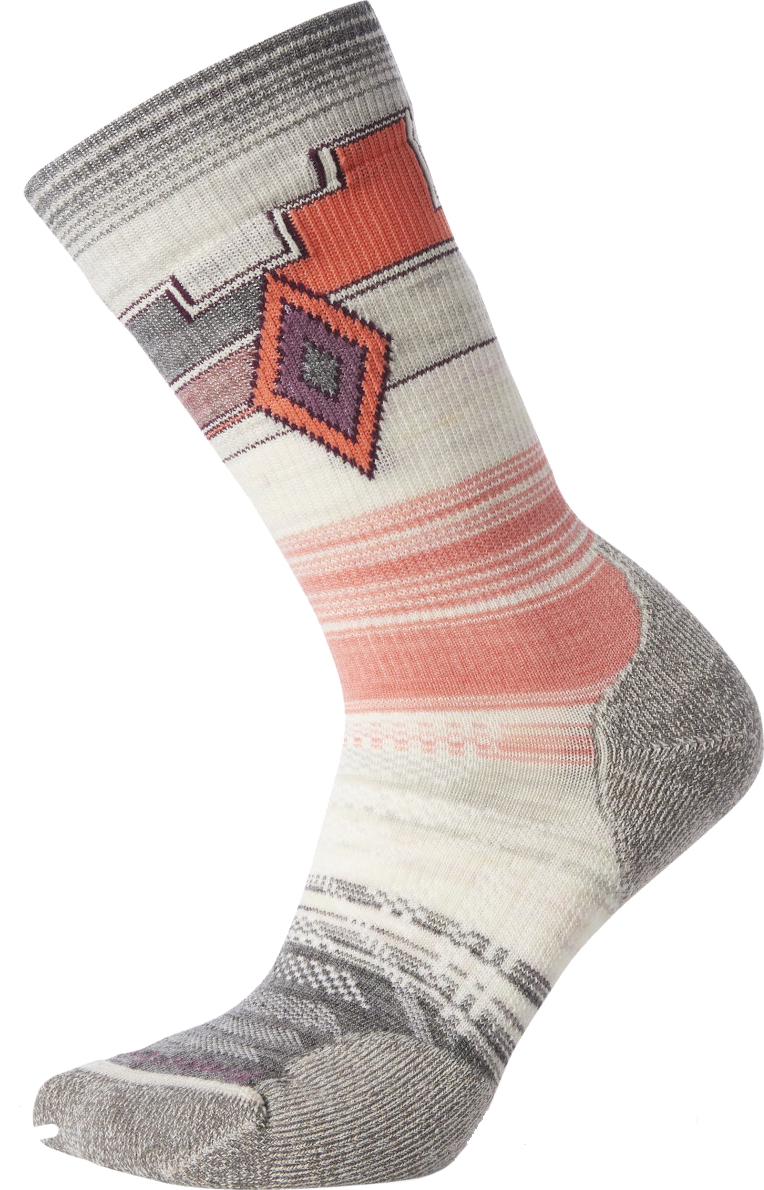
- Socks or hiking socks
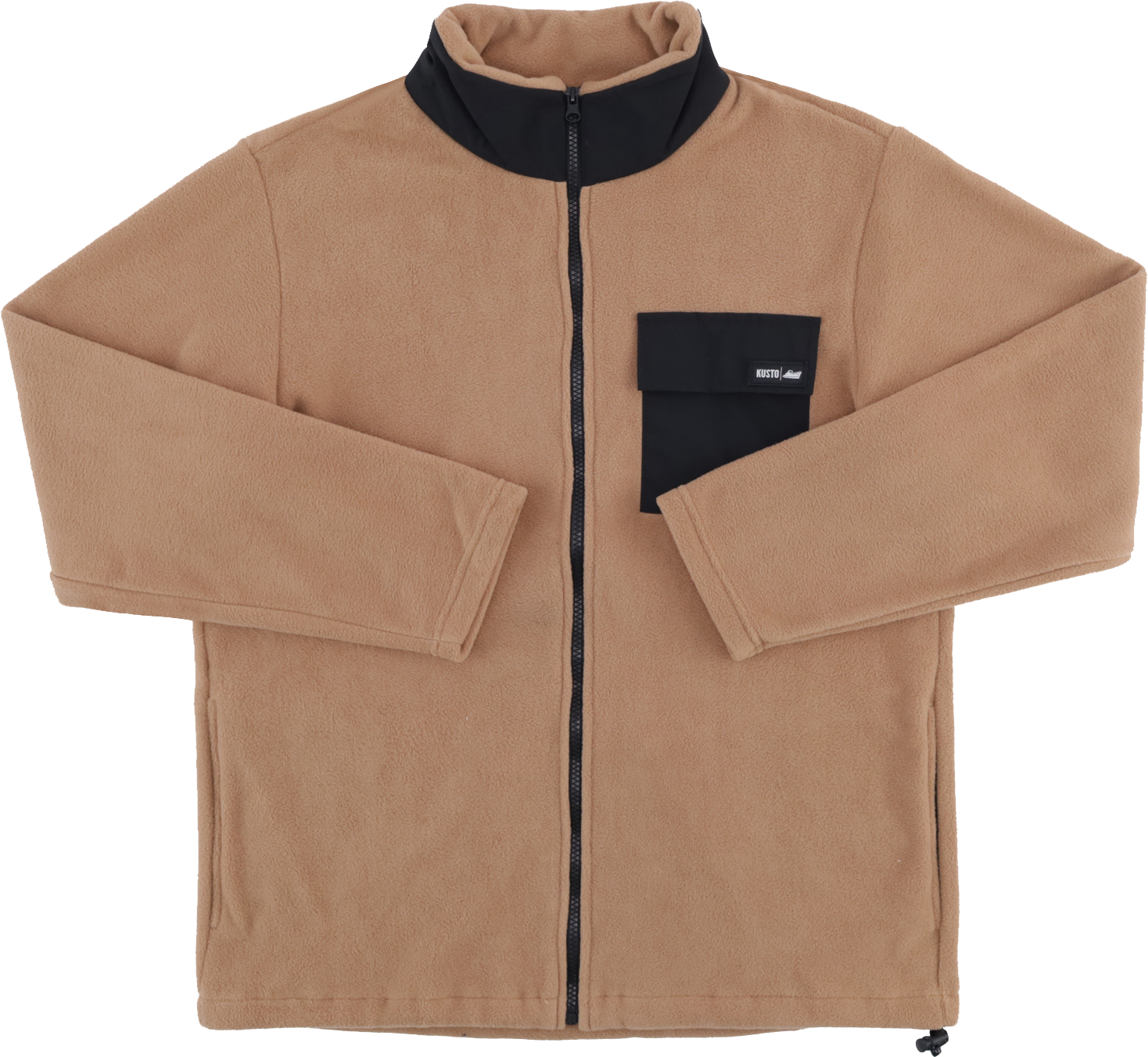
- Warm fleece jacket
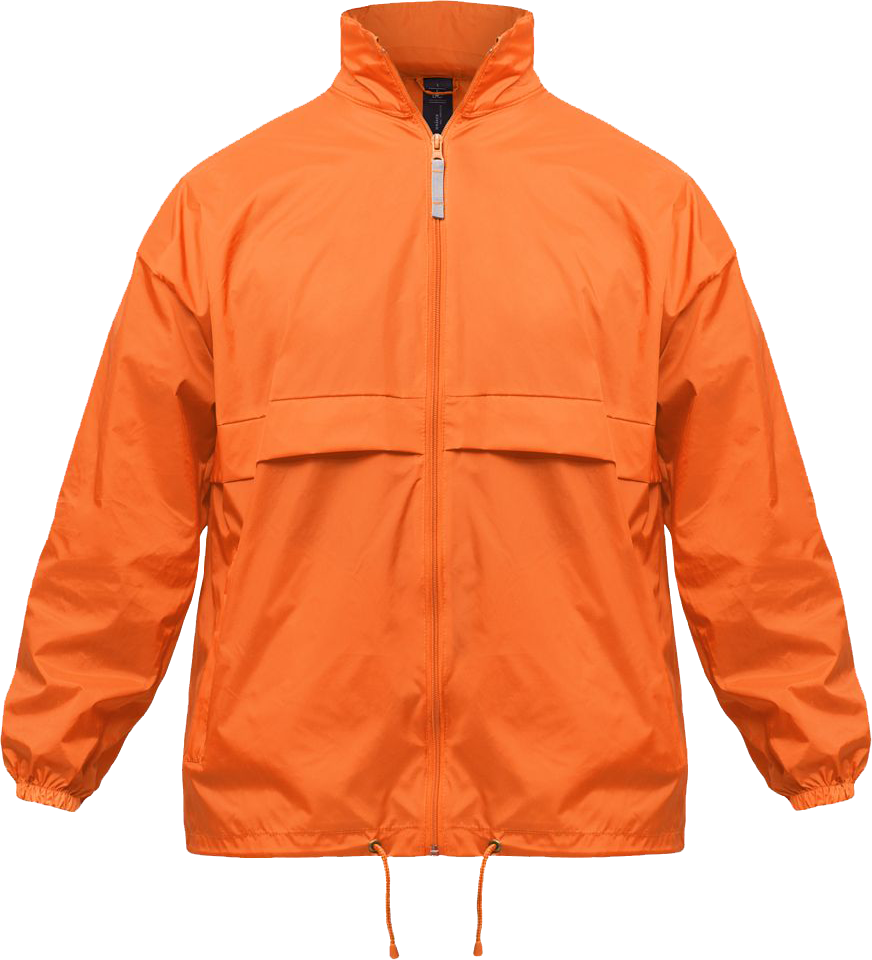
- Windproof and waterproof jacket (hardshell)
- Sleepwear
- Neck gaiter / Buff
- Gloves
- Warm beanie
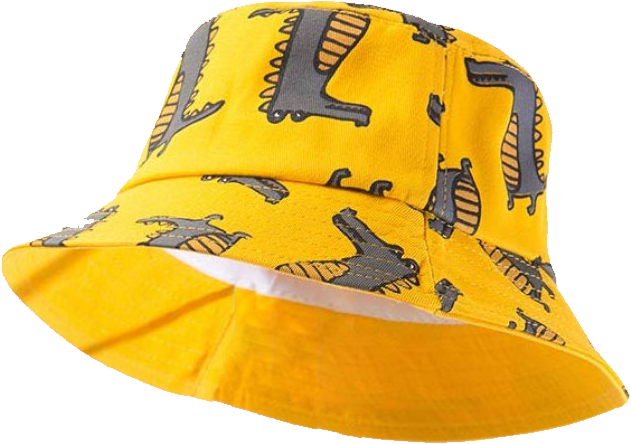
- Headwear (sun hat, bandana, cap)
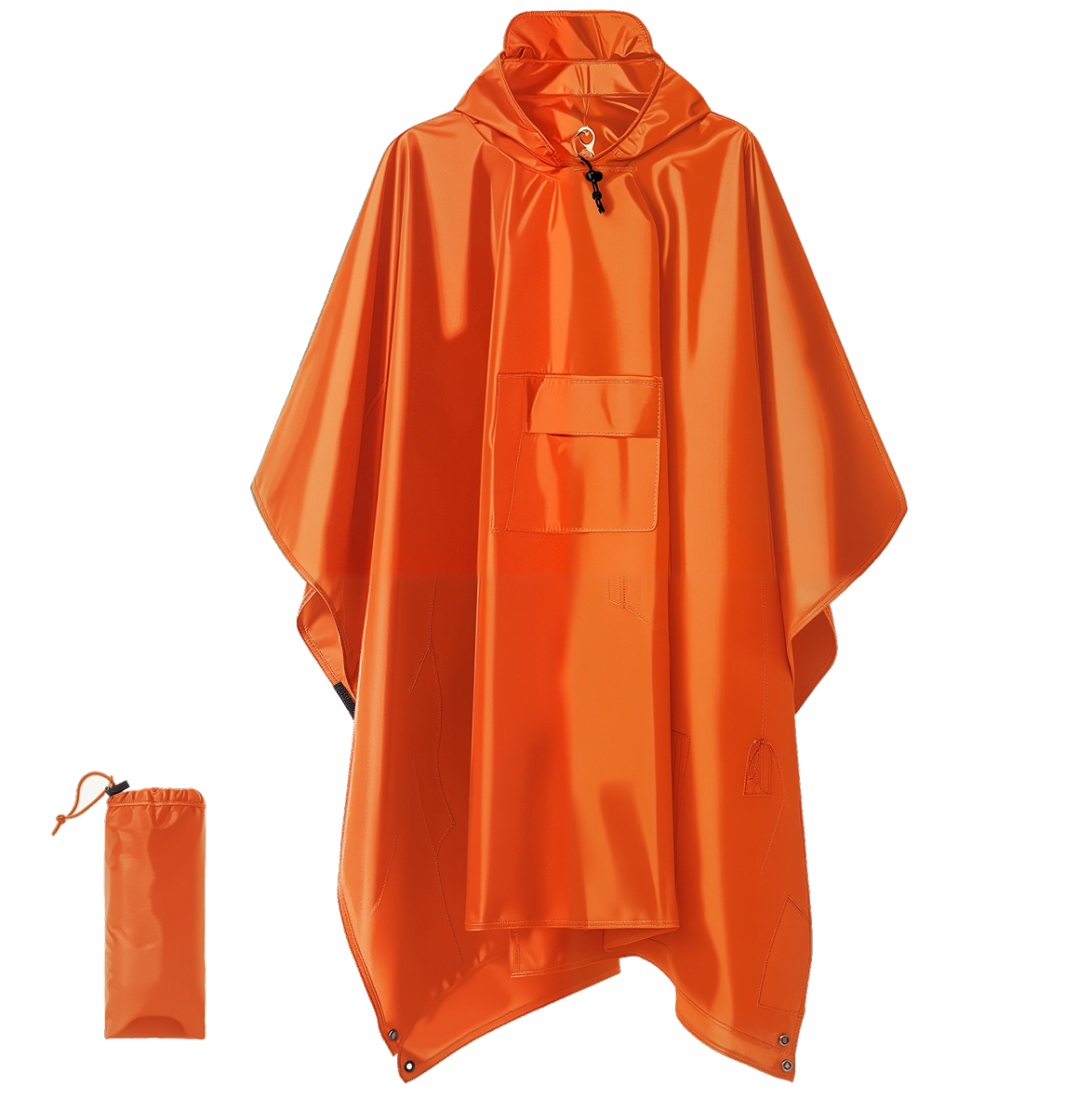
- Rain poncho with hood
- Hiking boots
- Camp shoes / Crocs
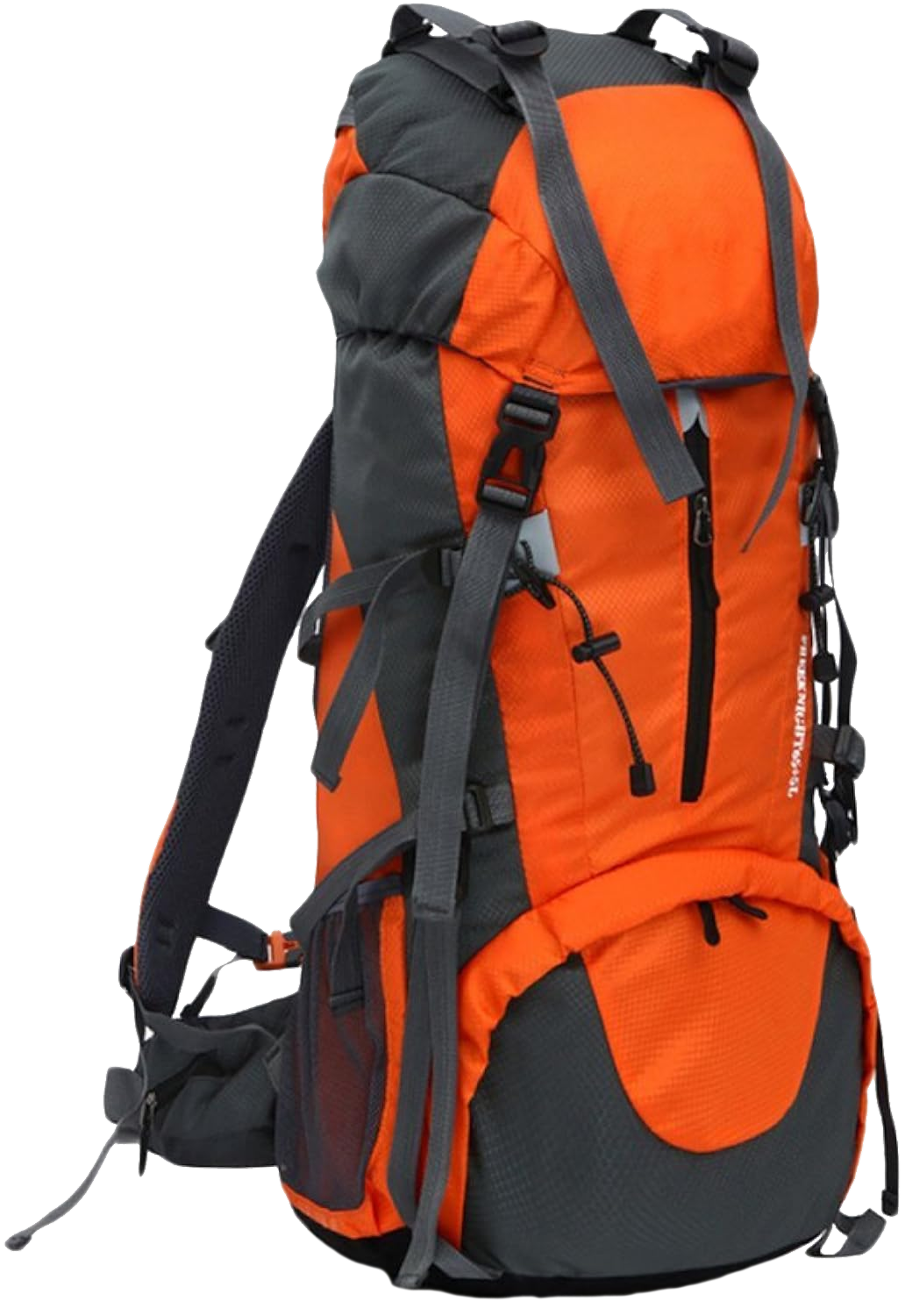
- Hiking backpack 70−90 liters with rain cover
- Sleeping pad
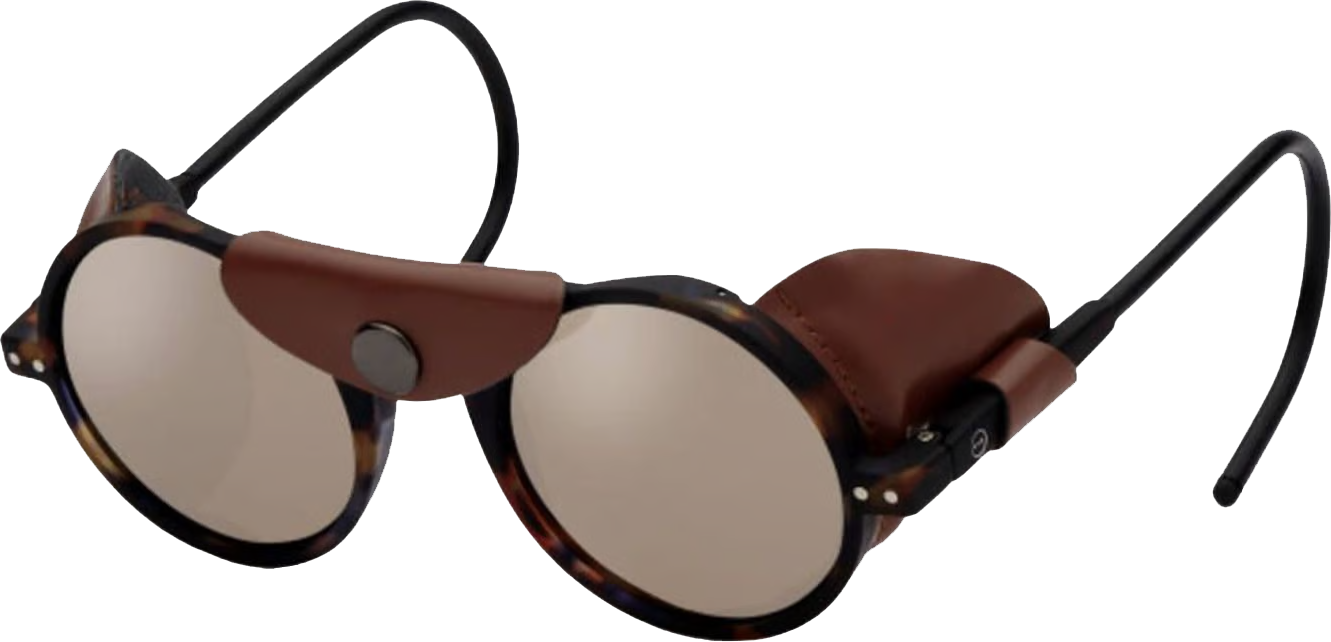
- Sunglasses
- Raincoat
- Sit pad
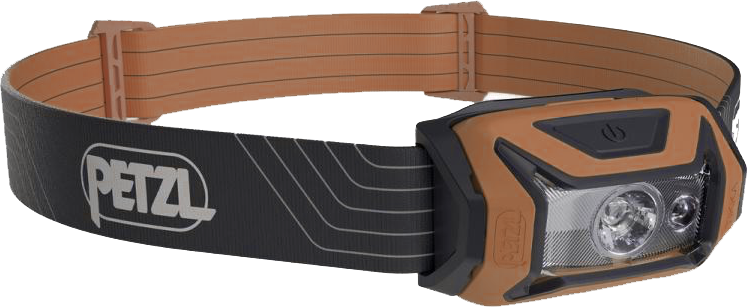
- LED headlamp
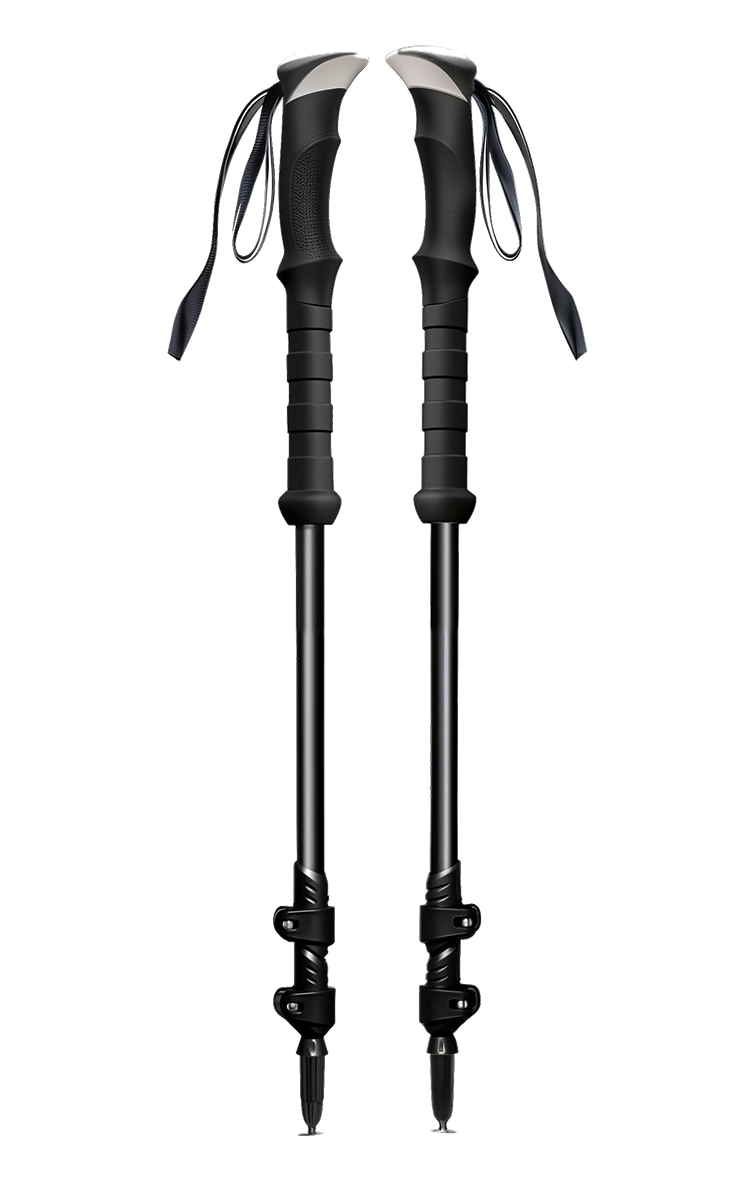
- Trekking poles
- Warm sleeping bag (comfort rating +0°C)
- Passport
- Insurance
- Cash
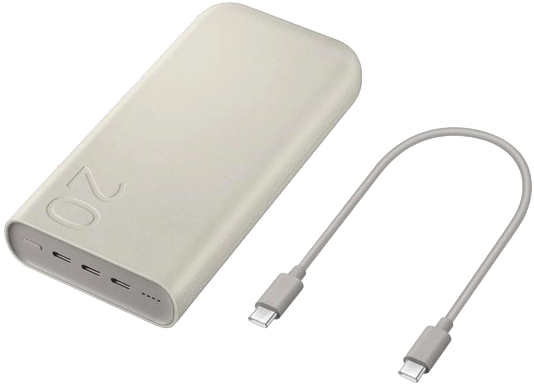
- Power bank
- All necessary chargers
- Thermos (1L)
- Bowl, mug, and spoon
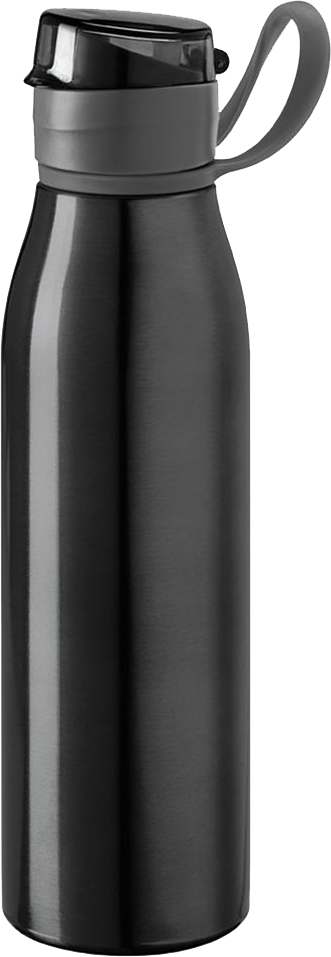
- Reusable water bottle
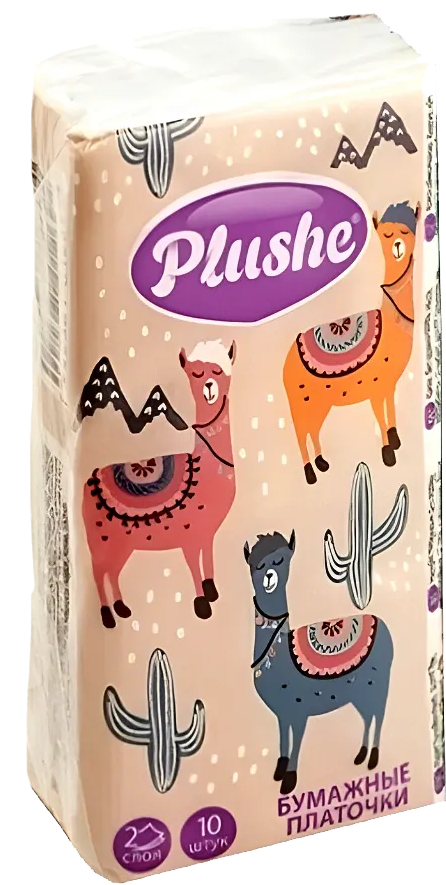
- Toilet paper, wipes
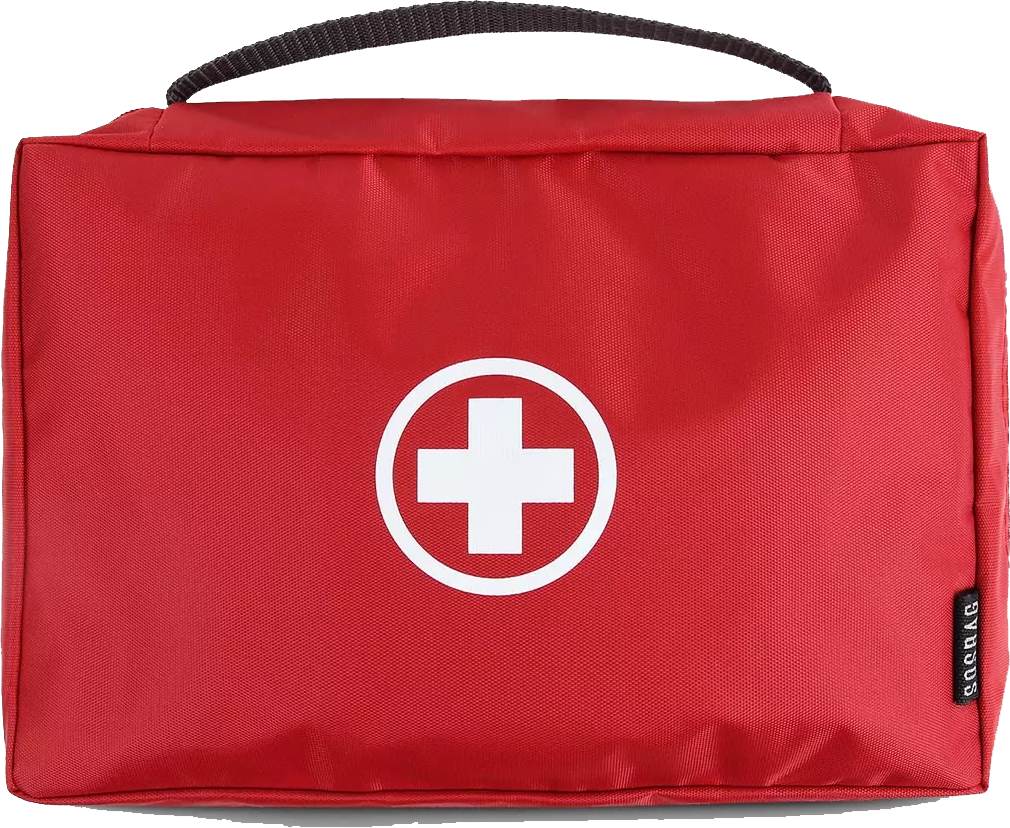
- Personal first aid kit
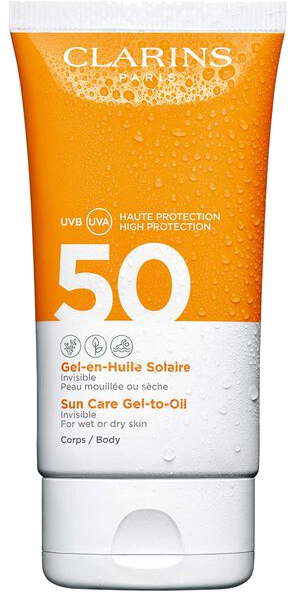
- Sunscreen and SPF lip balm
- Personal hygiene items
Trip FAQ
Round-trip transfer, guide support, meals on the trail
nope
You'll need to carry a backpack weighing roughly 10-15 kg.
Meals are included (2-3 times a day). Everyone pitches in to cook together with the guides. For vegetarians, we set aside portions before adding meat, but we don't use separate cooking pots (feel free to bring your own if needed).
Only at the very beginning and the end of the route. Stock up on power banks.
If you have serious knee or back pain from carrying a pack, it's better to sit this one out.
We strongly recommend getting medical insurance that covers emergency transport.
HEADS UP!!! If you don't have it, you'll have to cover all transport and medical costs yourself.
HEADS UP!!! If you don't have it, you'll have to cover all transport and medical costs yourself.
Ready for an adventure?